Point-and-click adventure games for kids
Calm puzzle adventures in 16-bit pixel art that children can play straight in the browser: free, with no download, no account and no ads. This guide explains what these games are, which of ours to start with, and how to play them together.
In short
- What
- Story games where you tap on things to look at them, pick up items and solve small puzzles
- First game
- Moonhoof, the easiest one (about 20 minutes)
- Age
- Moonhoof and Emberfall from 7, Whispers of Ravenholt from 9. Younger children can play with a parent reading along, and adults enjoy them too.
- Length
- About 15 to 20 minutes per game
- Cost
- Free: no ads, no in-app purchases, no sign-up
- Devices
- Tablet, phone or computer, in the browser
- Languages
- English and Dutch
Why point-and-click games suit children
A point-and-click adventure is a story you move forward yourself. You look around a drawn scene, tap whatever seems interesting, talk to the characters and work out which item helps where. Nothing happens on a timer, so a child can think as long as they need.
That slow pace is the point. Instead of quick reactions, these games reward looking carefully, reading what characters say and trying an idea to see if it works. A puzzle usually has a small, logical answer: if a dog won't let go of a key, what might it want instead, and where could that be?
Each game on this site is short, around 15 to 20 minutes, which fits in one sitting and gives a clear ending instead of an endless loop.
Which game to start with
From easiest to most challenging:
-
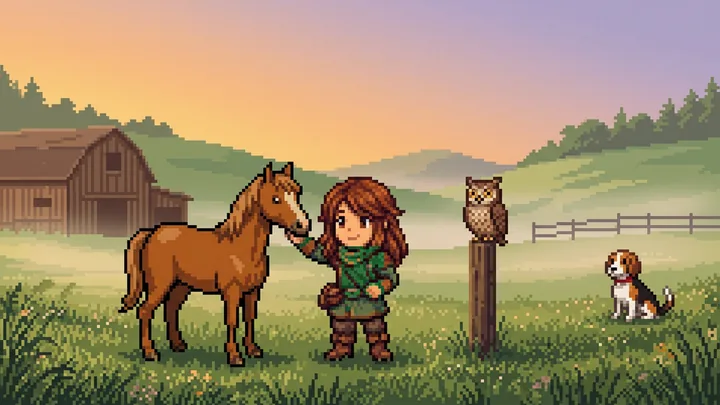
Moonhoof
~20 minEasyAge 7+
Loïs sets out to rescue her horse Moonhoof. A skittish dog, a wise owl with a riddle and a hissing snake stand in the way. Gentle and cosy, the best first adventure.
Play Moonhoof → Hints & walkthrough -
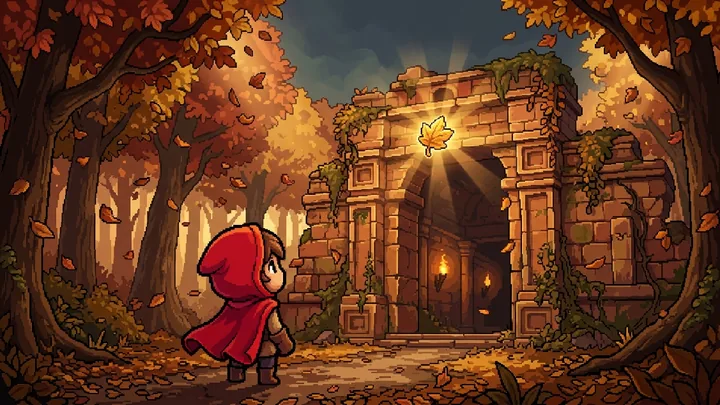
The Amulet of Emberfall
~15 minEasyAge 7+
Eternal autumn, a stolen amulet and a sleeping minotaur. Children gather and combine items and brew a sleeping potion. A little more puzzling than Maanhoef, still easy.
Play Emberfall → Hints & walkthrough -
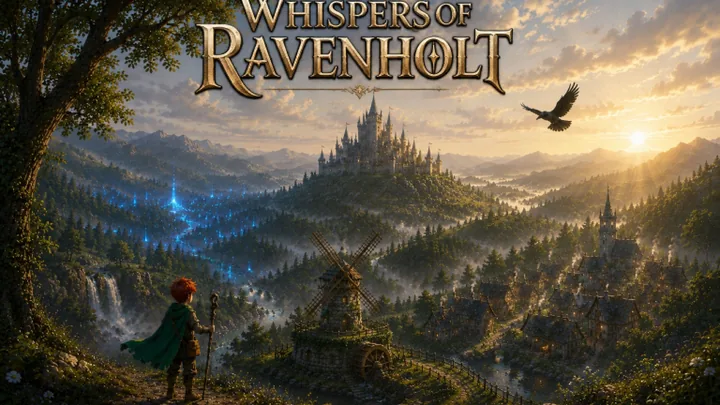
Whispers of Ravenholt, Part 1
~15–20 minMysteryAge 9+
Young Finn finds out why the village fountain is running dry. More reading and more steps to remember, so it suits older children, or younger ones playing with a parent.
Play Part 1 → Hints & walkthrough -
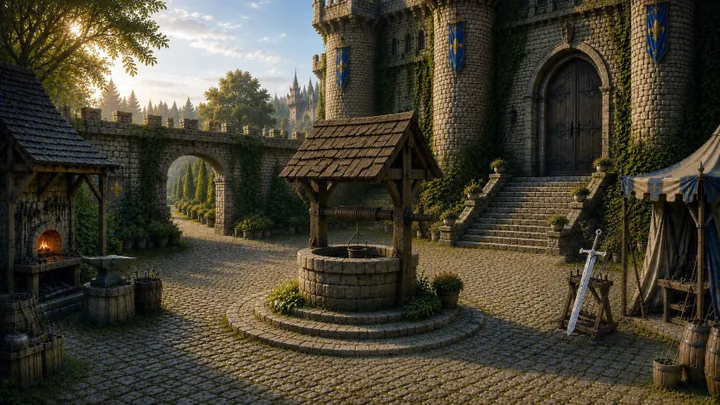
Whispers of Ravenholt, Part 2
~15–20 minMystery, sequelAge 9+
Finn slips into the castle to free his father. It continues the story of Part 1, so play that one first.
Play Part 2 → Hints & walkthrough
Playing together
- Read along
For children who are still learning to read, read the characters' lines aloud and let them choose where to tap.
- Think out loud
Ask what they think an item is for before they try it. Guessing and checking is half the fun.
- Try the other language
Every game has English and Dutch. Playing a game they already know in the other language is an easy way to practise.
- Stuck? Look again
Tap every place in the scene once more and try each item on things. The answer is almost always something already on screen.
Safe to hand over
- No adverts and no in-app purchases.
- No chat and no contact with other players.
- No tracking unless you say yes: anonymous Google Analytics only runs after you accept the cookie question. See our privacy page.
- No download and no account needed. In Whispers of Ravenholt, an optional free account only stores game progress in the cloud.
Questions parents ask
What age are point-and-click games suitable for?
It depends more on reading than on age. As a guide, Moonhoof and The Amulet of Emberfall suit children from about 7, and Whispers of Ravenholt from about 9. Younger children can play with a parent reading along, and the games are made for adults as much as for kids.
Are there ads or in-app purchases?
No. The games on RetroAdventureWorld are free, with no adverts, no in-app purchases and no chat with other players.
Do the games work on a tablet or phone?
Yes. They run in the browser on tablets, phones and computers. On a phone, turn it sideways for the best view.
Can my child play in Dutch or English?
Yes. Every game has English and Dutch, so children can play in their own language or use the other one to practise.